
Vigil
Post-surgery follow-up at home, with concerns surfaced to the surgical team sooner.
Daily check-ins written by the surgeons, routed by their own rules, and one worklist for the team.
Vigil in use
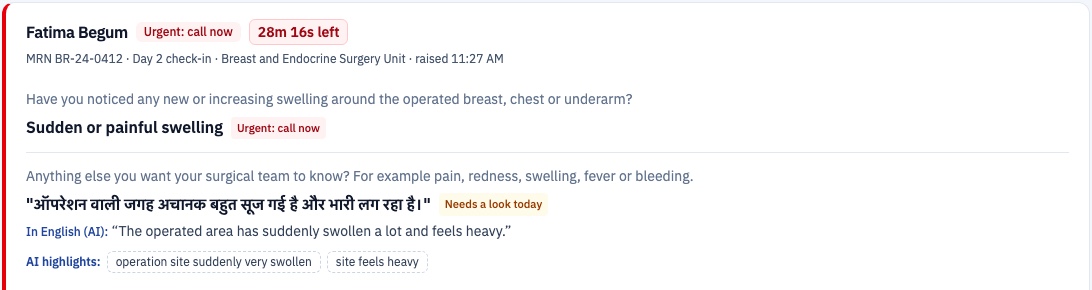
The patient answers at home. The team sees what needs attention first.
Screens from the live app, shown with a demo hospital and sample patients.
For the patient (swipe for more)
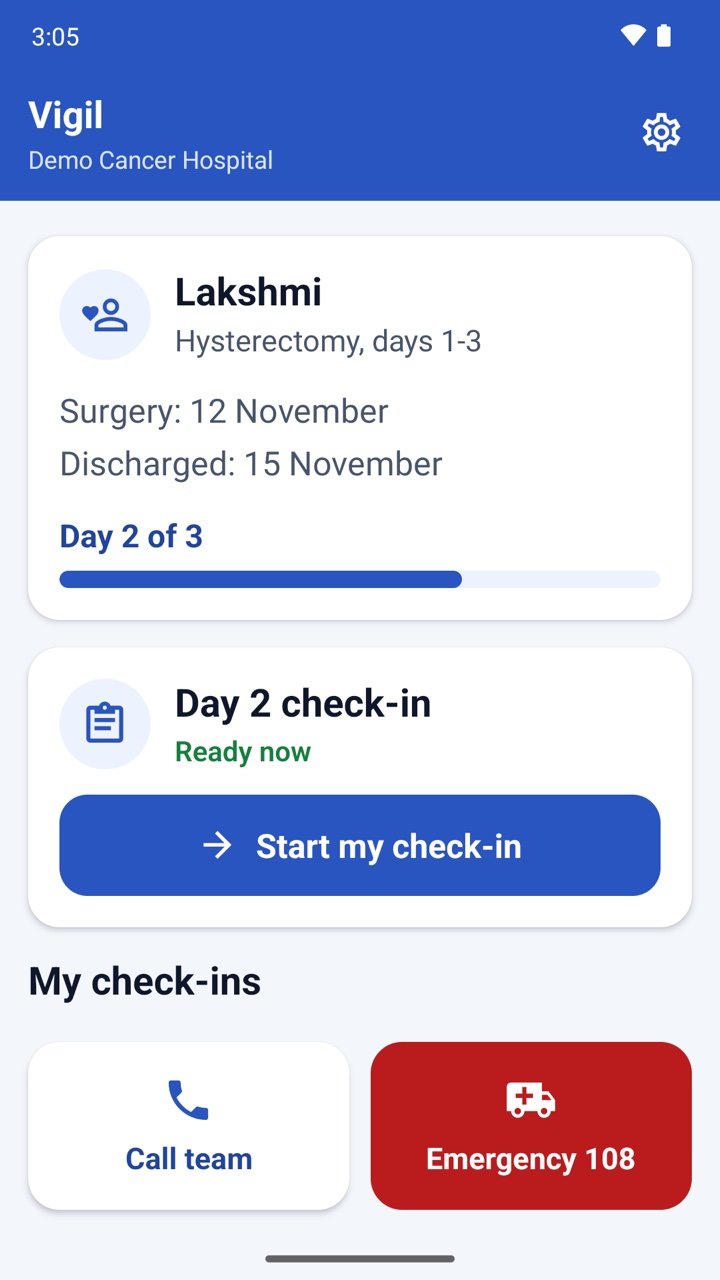
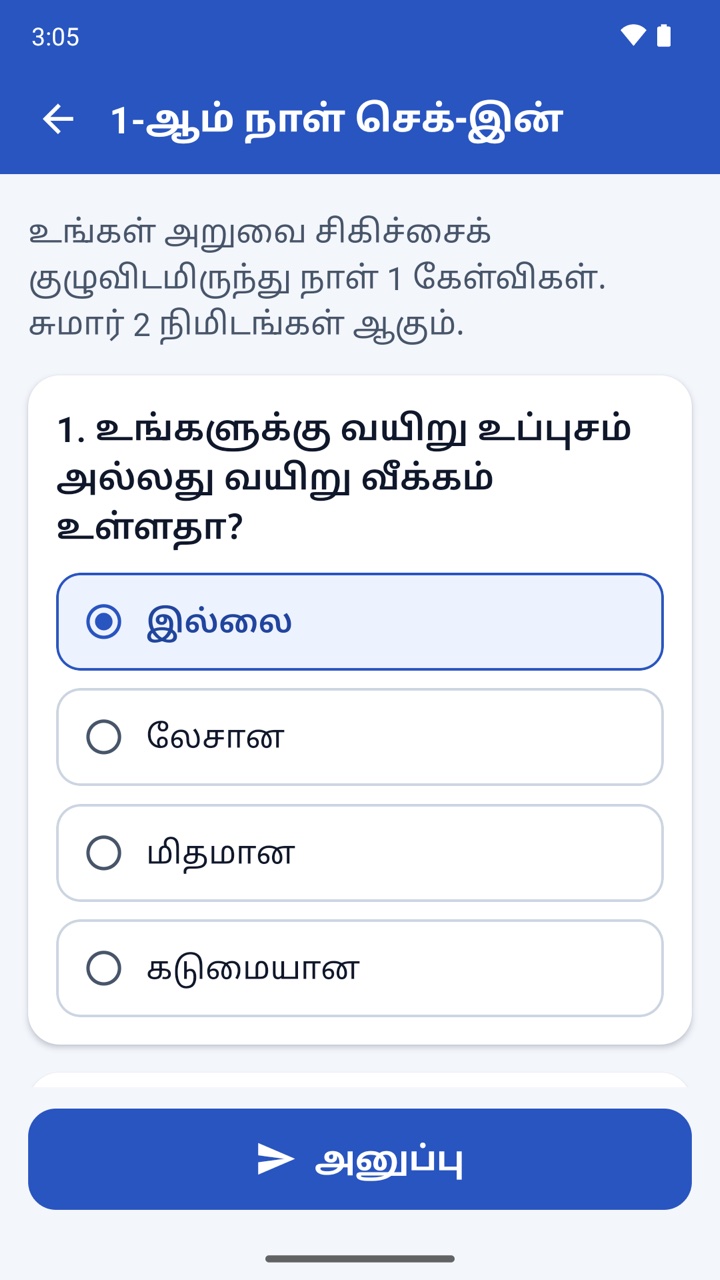
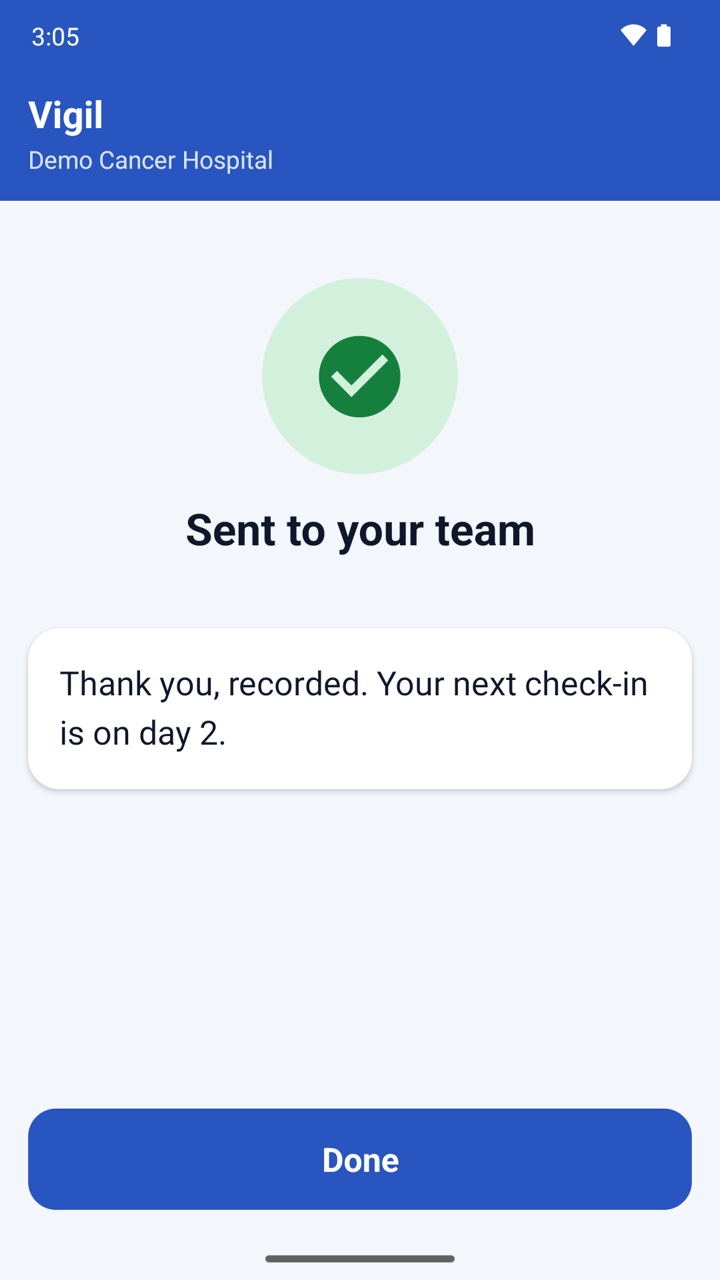
For the surgical team
Selected for the Grand Finale
Health-a-thon 2026
Vigil is one of 30 teams in the Grand Finale of Health-a-thon 2026, a Doctor × Technology hackathon by the Koita Foundation and the Koita Centre for Digital Health (KCDH), IIT Bombay, in collaboration with FOGSI, the National Cancer Grid and RSSDI. Each team pairs practising doctors with technologists to solve non-clinical, operational problems in Cancer Care, Diabetes Care, and Maternal and Child Health.


-
Sep–Oct 2026
Round 1
Idea submitted by the team, with a practising surgeon as Clinical Lead.
-
Oct–Nov 2026
Build sprint
Shortlisted after Round 1 to build and test the product.
-
Nov 2026
Top 30 finalists
One of ten finalist teams in the Cancer Care track.
-
28 Nov 2026
Grand Finale
Presenting to the jury at IIT Bombay, Mumbai.
The gap
The first week at home is when problems appear, and when the team hears least.
After cancer surgery, patients go home within days, often far from the hospital, and the first clinic review is 7 to 10 days later. Wound problems, swelling, drain issues or fever can appear in between, and the team usually hears about them only when the patient phones or arrives at casualty.
What Vigil does
-
Daily check-ins. For the first week after discharge, written by the surgeon for each surgery.
-
No download required. A web link, the Vigil app or Telegram (WhatsApp in the pipeline), in English, Tamil or Hindi, with photos and voice notes.
-
Routed by the surgeon's own rules. To routine, needs a look today, or urgent: call now.
-
One worklist for the team. Urgent first, response timers, and a record of every action taken.
-
Missed check-ins. Get a reminder, then a "please call" flag.
How it works
- Step 1
Enrol at discharge
The nurse coordinator adds the patient and the surgery.
- Step 2
Patient answers
A few short questions each day, on their phone.
- Step 3
Vigil routes
Each check-in goes to the level the surgeon set for that answer.
- Step 4
Team acts
Flagged check-ins reach the worklist; the team calls and records what they did.
Safe by design. Vigil assists; it never diagnoses or tells a patient their status. AI handles the language work (voice notes, translation, summaries); the routing rules are the surgeon's. Every clinical call is the team's, the team can change any level, and every action is audited.
Team Prognosis
-
Clinical Lead
Dr Saravana Rajamanickam
Chief, Division of Thoracic Oncology, Thangam Cancer Center
-
Co-Clinical Lead
Dr K. C. Keerthana Sri
Consultant, Head and Neck Surgical Oncology, Thangam Cancer Center
-
Technical Lead and Solutions Architect
K Saravana Kumar
Skematix Technologies, Coimbatore
Let's talk about Vigil
For hospitals and surgical teams who want their patients followed up at home.